
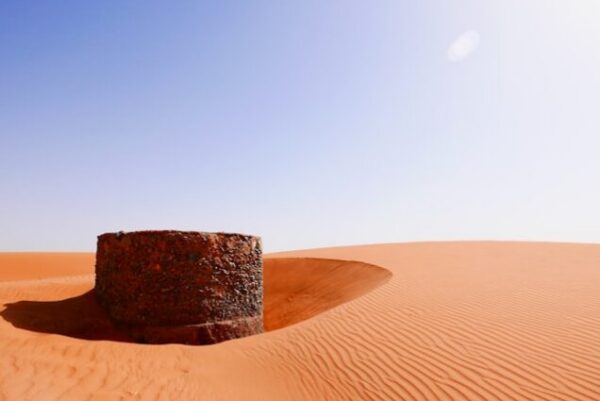
Photo by Zouhair Majzoub on Unsplash
A reflection on Genesis 16 & 21
This past year, I’ve found myself thinking a lot about the story of a woman named Hagar. We spent time with her story at Bible study this winter, and I realized something: although I had always known who she was in relation to Abraham and Sarah, I had missed something important: who she was to God, and what her story reveals about Him.
Hagar was an Egyptian slave. She wasn’t treated like a person; she was treated like a solution. God had promised Abram that he would be the father of many nations, but years passed with no child, and Sarai grew older. So Sarai came up with a plan to “help” God along, to accomplish in human strength what God had promised to do Himself. She gave Hagar to Abram to produce an heir.
That’s jarring, isn’t it? Even if it was culturally acceptable at the time, it wasn’t God’s plan. And it caused so much strife and pain. When Hagar became pregnant, the tension between the two women became unbearable, and Hagar did the only thing she felt she could do: she ran into the wilderness.
The God Who Asked Her a Question
In Genesis 16, the angel of the Lord finds Hagar near a spring in the desert and asks her, “Where have you come from, and where are you going?”
It’s not that He didn’t know. He was giving her the chance to voice her pain. And she does: “I’m running away.”
He doesn’t scold her. Instead, He gives her a promise for the son she’s carrying. His name will be Ishmael, which means God hears. And He tells her the boy will be like a “wild donkey of a man.” That sounds like a strange thing to say, but to Hagar it would have been a promise of freedom. In the ancient world, the wild donkey symbolized untamed independence. Unlike animals that wore yokes and carried burdens, the wild donkey roamed free. Her son was not going to live in bondage the way she had. He was going to be strong and free. That must have given her so much hope.
Then Hagar does something remarkable. She names God El Roi, the God who sees. She is the first person in all of Scripture recorded as giving God a name from her own encounter with Him. This woman, who was unseen by everyone around her, was seen by the Creator of the universe. And knowing she was seen gave her the strength to go back. Not because the situation had changed, but because God had met her there.
God Opens Hagar’s Eyes
Years later, Hagar finds herself back in the wilderness. This time she and Ishmael have been sent away from Abraham’s house at Sarah’s insistence, and their water has run out. Ishmael is dying. Hagar places him under a bush because she can’t bear to watch him suffer, and she sits a bowshot distance away and weeps.
God comes to her a second time, and one verse from our study especially stayed with me: Genesis 21:19, “Then God opened her eyes and she saw a well of water.”
The first time in the wilderness, she recognized God saw her. But the second time, God opened her eyes to His provision.
How many times have I been in a dry place, convinced there was nothing there, when what I actually needed was for my eyes to be opened to what God had already placed in front of me?
I Know What That Wilderness Feels Like
I grew up in a Christian home, but for a long time I didn’t understand what faith actually was. I saw it as a restrictive set of rules and rebelled against it. I went looking for my own freedom in partying, drug use, and alcohol abuse, and what I found instead was deep depression and a life that was falling apart.
I remember a time during that season when God saw me, even though I was still running from Him. My car broke down behind a jewelry store. The owners of the store helped me; they found me a temporary job at a carnival that was in town for the weekend, paid for a hotel room, and invited me to church. I wasn’t ready yet. I said no and kept running. Things got worse the further I ran.
When my life had gotten bad enough that I was contemplating suicide, my parents encouraged me to go to Mission Teens, a free residential discipleship program for people struggling with life-controlling problems. I was reluctant, but I was desperate, and I entered the program in February 2003. For the first two months I just went through the motions. Then one night I couldn’t sleep, and I started reading the Gospel of Matthew. When I got to Matthew 4:18-22, I read about Jesus calling the disciples and how they left everything to immediately follow Him. As I read those verses, the Holy Spirit spoke to my heart. For the first time, I understood that Jesus was calling people not to just believe ideas about Him, but to follow Him with their whole lives. God opened my eyes to His ultimate provision in Jesus.
I knew that saying yes would mean a total life commitment. But I said yes, and I’ve followed Him ever since.
That was more than twenty years ago. After I completed the program, I stayed involved with Mission Teens in various ministry roles. Eventually I became the bookkeeper, and I also teach a weekly Bible class for the people currently in the program. Now I get to help people who are in the middle of their own wilderness and point them toward God’s provision in their own lives.
Another Woman at a Well
Hagar’s story has also made me think about the Samaritan woman in John 4.
She was drawing water at noon, the hottest, most uncomfortable part of the day. Maybe she went to the well at that time because she wished to avoid the stares and whispers of the other women. She had been married five times. Perhaps some of her husbands had died and some had left her. The man she was living with when she encountered Jesus was not her husband. In the culture of Jesus’ day, women without the financial and social stability that marriage often provided could be especially vulnerable. We don’t know all the circumstances that had brought her to that place in her life. But it does seem like she didn’t want to be seen.
Yet, Jesus was already at that well waiting for her. He looked her in the eye and offered her living water. He told her that whoever drinks the water He gives will never thirst again. He knew her whole story and didn’t look away.
Both women, in very different kinds of wilderness, met the same God. The God who finds you in your desert places. The God who is already waiting at the well when you arrive.
What I Keep Coming Back To
Maybe you’re in a season where you feel unseen, whether in a full house, in a busy life, or in a situation you didn’t choose. Maybe you’re grieving something no one else can see. Maybe, like Hagar, you’re somewhere between where you came from and where you’re trying to go.
Or maybe guilt and shame have made you want to hide and remain unseen.
The well is there.
El Roi is still the God who sees. He is the same God who met Hagar in the desert, who waited at the well in Samaria, who found a desperate girl in a discipleship program in 2003. He sees us. He hears us. He opens our eyes to His provision and brings life into the dry places where we thought nothing could grow again.
Mission Teens is the free, non-profit residential discipleship program that changed my life. If you or someone you love is struggling, you can learn more at missionteens.com.